
Indian Institute of Soil Science, Bhopal organized National Campaign on Soil Health Management under mission LiFE
Log in to save- Published
- 152 views
- 3 min read
Source: iiss.res.in
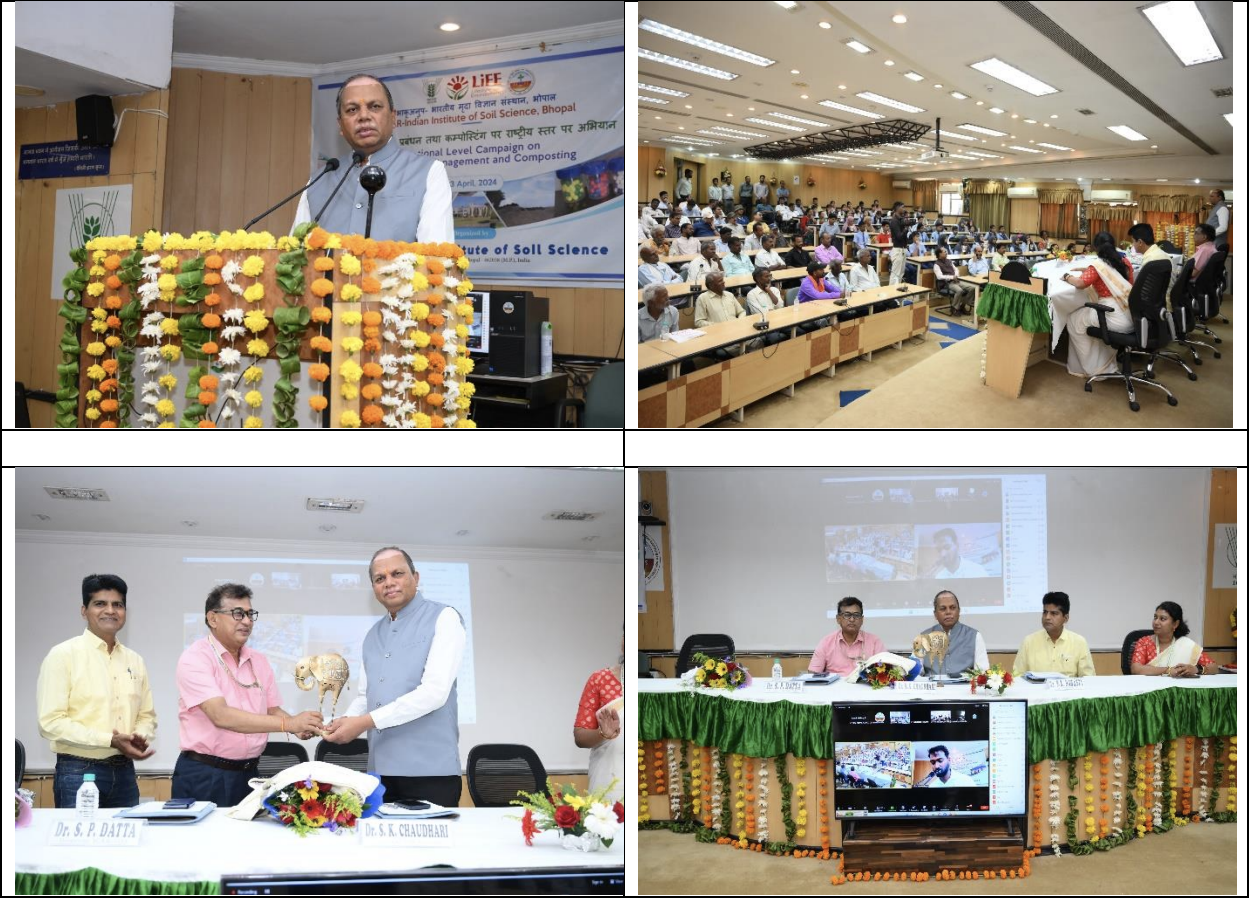
ICAR Indian Institute of Soil Science (IISS), Bhopal organized a National Campaign on Soil Health Management and Composting under mission LiFE (Lifestyle for Environment) of Govt of India on 23.4.2024. The institute has developed various composting technologies like vermicompost, enriched composts, Ekcel decomposer, family net vessel composting, rapodecomposter for converting agrowaste to valuable composts. IISS has also developed several microbial biofertilizers for minimizing the use of chemical fertilizer in agriculture. A minilab named as “Mridaparikshak” has been developed by the institute for assessing soil quality which contributed to national soil health mission. In this campaign, scientists and staffs from different ICAR institutes, state agricultural universities, and representatives from state governments, farmers and school students participated in with great enthusiasm and fervor. Deputy Director General (DDG), Natural Resource Management (NRM), ICAR, New Delhi Dr. S. K. Chaudhari graced the occasion as Chief Guest. The campaign was carried out mainly to spread awareness on soil health management and composting to improve agriculture and abate adverse effect of climate change. Program was started with ICAR song and welcoming of guests. Detail of the program was outlined by the organizing secretary Dr. S. R. Mohanty, Head of Soil Biology Division, IISS. He briefed about the significance of the program and elaborated activities undertaken to make it a nation-wide campaign. Dr. S.P. Datta, Director of the institute highlighted that state of soil health is declining alarmingly and posing serious threats to agriculture and environment. Soil health can be improved by judicial use of inorganic fertilizers, crop rotations and conservation agricultural practices. Dr. S. K. Chaudhari, DDG (NRM), highlighted that the mission LiFE aims to protect environment by educating people and making them aware that there is need of change in their lifestyle to protect earth from climate change. He emphasized that soil health decline is a challenging issue and there is need of balanced fertilizer use, integrated nutrient management and application of organic fertilizers like composts to improve soil health. He also advised to the farmers that crop residue burning should be stopped as it is causing serious air pollution, and reducing soil biodiversity affecting soil health. Crop residues should be converted to compost and be applied to agricultural fields as it is a rich source of organic matter and nutrients, which plays key role in maintaining soil health and crop productivity.
A technical session was organized where Dr. DLN Rao stressed the significance of soil organic matter and the beneficial impact of microbes on soil health. Additionally, he underscored the role of bio-fertilizers in maintaining soil fertility. Dr. A. B. Singh elaborated on how natural and organic farming practices contribute to enhancing soil health. He distinguished between organic and natural farming methods, highlighting the importance of nutrient and insect management in preserving soil quality. Providing an overview, Dr. A.K. Biswas emphasized the criticality of soil health and its implications. He addressed emerging challenges and both national and international commitments in Indian agriculture, especially as the country marks 75 years of Independence. Dr. Biswas highlighted soils as crucial hotspots of biodiversity. School students were awarded for participating in various competitions under the themes of LiFE mission. Farmers got an opportunity to visit the composting facility and learned advance techniques on preparing compost from agrowastes. In the end vermicompost and Ekcel decomposer packets developed by the institute were distributed to farmers for agricultural use.
Comments
No comments yet. Be the first to share your thoughts.
Log in to leave a comment.