
National Nutrition Month 2026 Observed at Paiphijang Village
Log in to save- Published
- 69 views
- 2 min read
Source: icarneh.ernet.in
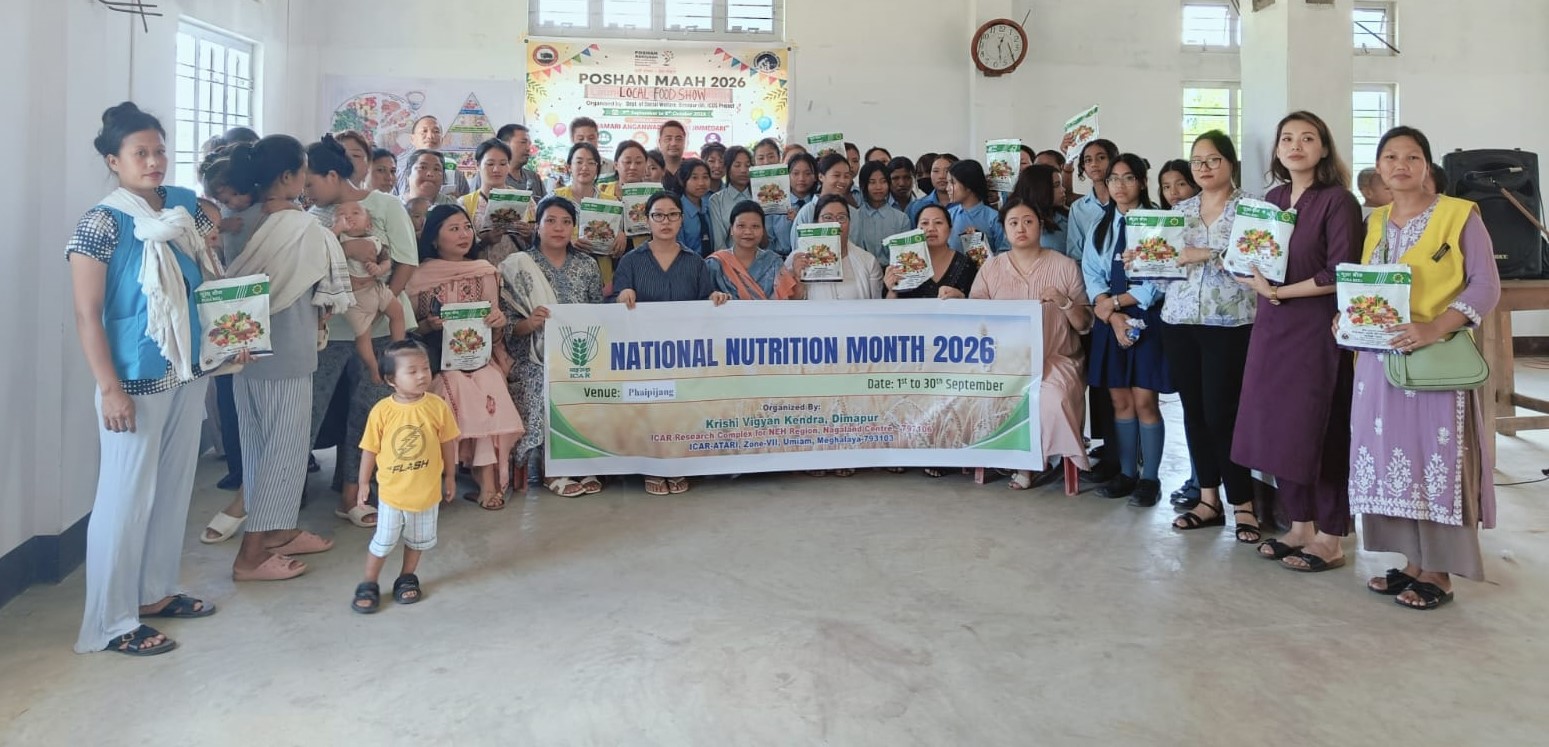
National Nutrition Month 2026 was observed at Paiphijang village by ICAR KVK Dimapur in collaboration with the Integrated Child Development Services (ICDS), Dimapur, and Nagaland State Rural Livelihoods Mission (NSRLM), Government of Nagaland. The importance of organizing the event was highlighted by Smti. Limasangla, CDPO Dimapur Urban with focus on ‘Hamari Anganwadi Hamari Jimmedari’ and brief note on themes of Poshan Maah was given by Smti. Limasenla Walling, District Poshan Coordinator. She explained the five themes of Poshan Maah i.e. Dietary Diversity and Adequate protein intake, fresh hot cooked meals, Community Ownership and Accountability, nutrition and Early stimulation and 10 years of Pradhan Mantri Matru Vandana Yojana (PMMVY). The programme focused on creating awareness about the importance of adequate and balanced nutrition among vulnerable groups, particularly pregnant women, lactating mothers and adolescent girls.
Dr. Chingakham Sima Chanu, SMS (Home Science), ICAR-KVK Dimapur, gave the awareness on the theme ‘dietary diversity and adequate protein intake’ with the highlight on the nutritional and dietary requirements of pregnant and lactating women and adolescent girls. Emphasis was also placed on consuming a balanced diet using locally available and affordable food resources to meet the increased nutritional requirements during different stages of life.
As part of the programme, participants were also sensitized on the importance of including diverse food groups in their daily diets, with special emphasis on fruits, vegetables and other locally available nutritious foods. Practical information was shared on improving household dietary diversity and making better use of locally available food resources for improved family nutrition.
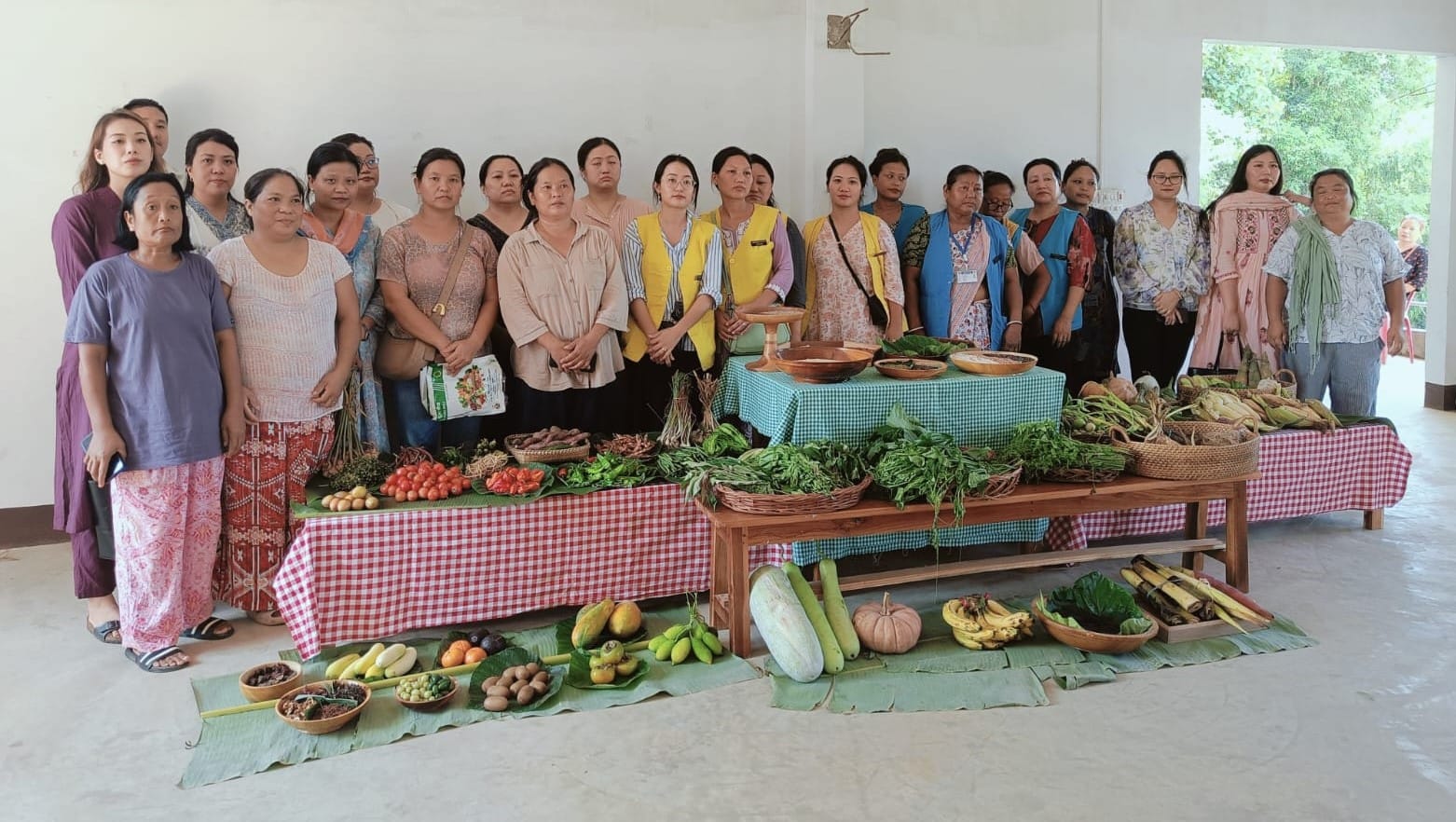
A local food show was also organized, where a variety of locally available fruits and vegetables were displayed to demonstrate the richness and diversity of nutritious foods that can be incorporated into the daily diet. The display provided a practical and visual learning opportunity for the participants and encouraged greater utilization of locally available food resources.
Vegetable kits were distributed to the participants to encourage household vegetable cultivation and promote access to fresh and nutritious vegetables. The initiative also aimed to encourage families to establish kitchen gardens as a sustainable source of nutrient-rich food.
The programme was attended by around 60 participants, comprising pregnant women, lactating mothers, adolescent girls, Anganwadi workers and members of Self-Help Groups (SHGs). The collaborative programme provided an opportunity to strengthen community-level awareness on nutrition and promote practical approaches for improving dietary diversity and household food and nutrition security.
Comments
No comments yet. Be the first to share your thoughts.
Log in to leave a comment.