Plant Profile
FamilyRosaceaeAyurvedic namePadmakUnani name---------Hindi namePadamEnglish nameWild Himalayan Cherry, Bird CheeryTrade namePadamParts usedBark and seed

Source: agriculture.vikaspedia.in
FamilyRosaceaeAyurvedic namePadmakUnani name---------Hindi namePadamEnglish nameWild Himalayan Cherry, Bird CheeryTrade namePadamParts usedBark and seed
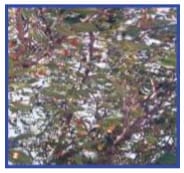
Prunus cerasoides is a medium size deciduous tree known as Himalayan wild cherry.
Its bark is brownish-grey, smooth, and peels off in thin shining horizontal stripes, exposing a shining copper-coloured surface.
Its leaves are ovate, acuminate, doubly serrate, and glabrous.
The petiole has 2-4 glands at its base.
The stipules are feathery. Flowering occurs in October - November.
Flowers are bisexual, occurring in fascicles of rose-red colour, gradually fading to nearly white.
Pollination is mainly by insects.
The fruits are produced in abundance with scanty pulp and are scarcely eaten, but are famous for making cherry brandy.
The plant is distributed in the temperate Himalayan region from Kashmir to Bhutan, Aka and Khasi hills in Assam and Manipur, at an altitude of 900-2300 m msl.
It prefers moderate shade and can be found flourishing under the moderate shade of other trees.
It requires moderate light conditions and grows in shady locations of hills and along fields.
The plant prefers temperate and moist conditions.
The plant prefers light sandy, medium loamy, and heavy clay soils and requires well-drained conditions.
The tree grows in temperate regions on hilly slopes.
Propagation is primarily through seeds.
It can also be propagated vegetatively through air layering and stem cuttings.
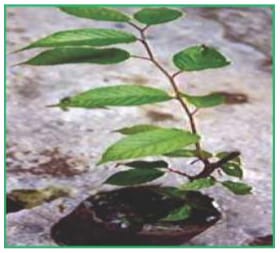
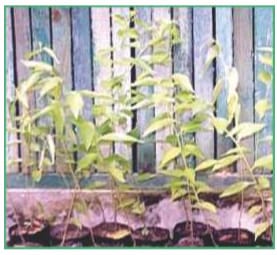
Raising Propagules: The plant is usually propagated through seeds. Seeds mature in March-April. Fully ripened fruits are picked from the tree or collected from the ground. Seeds are removed from the fruits, washed free of pulp, and sown. Seeds may be sown immediately after collection in April to mid-May. Seeds remain viable for 2-4 months, with higher germination percentages in freshly collected seeds. Seeds should be sown in well-prepared nursery beds or polythene bags containing a mixture of sand, soil, and farmyard manure (1:1:1). Germination begins within 25 days and is completed within 15 days.
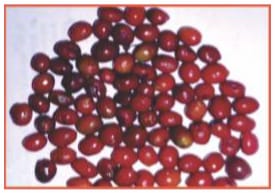
Propagule Rate and Pretreatment: Pre-sowing treatments like soaking seeds in water or hot water treatment have a favourable effect on germination. Ripened and de-pulped seeds treated with hot water for 10 minutes show a high germination rate.
Land Preparation and Manure Application: Land for plantation is prepared well in advance before the onset of monsoon in May. The field is harrowed mechanically. Pits of 45cm X 45cm X 45cm are dug and filled with dry farmyard manure.
Transplanting and Optimum Spacing: Seedlings at the 4-leaf stage are transferred from nursery beds to polybags. Seedlings of about 65 cm height are transplanted into the field. Approximately 1100 plants/ha at a spacing of 3m X 3m in open fields and around 620 plants/ha at a spacing of 4m x 4m in an intercropping system are found to be appropriate.
Interculture and Maintenance Practices: Seedlings are transplanted into pits during the monsoon in July. Weeding is carried out monthly during the monsoon season. Plants require manuring in their initial growth stage. Well-rotten cattle manure or compost at about 750 kg/ha is applied in September-October. Watering at an interval of 10-15 days is favourable during summer. Lower branches are pruned in the second year during winter to avoid crowding.
Irrigation Practices: Irrigation on alternate days is necessary at the seedling stage to promote favourable growth. Irrigation of saplings at an interval of 10-15 days is recommended during summer months to overcome dry spells until the onset of monsoon.
Weed Control: The frequency of weeding depends on weed growth. Monthly weeding is carried out during the monsoon months.
Disease and Pest Control: No serious incidence of any insect pests or diseases has been noticed in this crop.
Crop Maturity and Harvesting: The tree flowers in autumn or early winter (October-December). Fruiting occurs between December and February. Fruits ripen from March - April. As Prunus cerasoides is a tree species, the harvesting of its bark and fruits from the plantation can only be done when the tree matures.
Chemical Constituents: Stem bark contains flavones and isoflavones. Stem sapwood yielded flavone glucoside. The leaves, twigs, bark, and kernels contain a cyanogenetic substance. Kernels contain oil similar to bitter almonds with a strong flavour of prussic acid.
The kernel is used as a remedy for stones and gravel in the urinary bladder.
The leaves, twigs, and bark contain a cyanogenetic substance.
The bark is used for plastering fractured bones.
Smaller branches are crushed, soaked in water, and taken internally to stop abortion.
Its stem is antipyretic, refrigerant, and useful in treating vomiting, leprosy, and leucoderma.
No comments yet. Be the first to share your thoughts.
Log in to leave a comment.