
Kagzi Lime: A Signature Crop Facing Challenges in Vijayapura
Kagzi lime, a renowned acid lime variety distinguished by its thin, paper-like rind and exceptional juice content, is a signature horticultural crop of Vijayapura district in Karnataka. Awarded the Geographical Indication (GI) tag in 2023, this variety has been cultivated since the early 1900s, particularly in the Indi and Sindagi taluks. Known for its larger fruit size, high ascorbic acid content, and superior culinary value, Kagzi lime is widely used in pickles, beverages, concentrates, cosmetics, and pharmaceutical formulations.
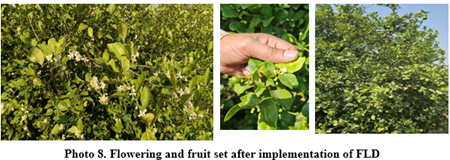
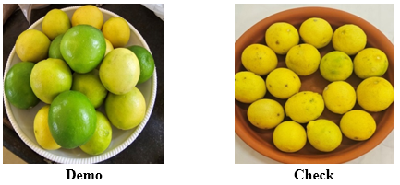
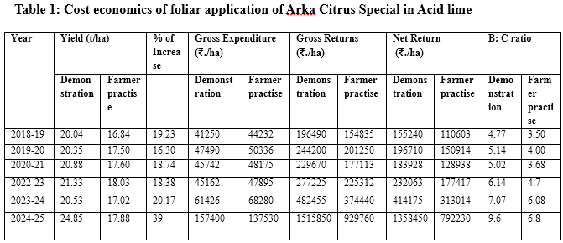
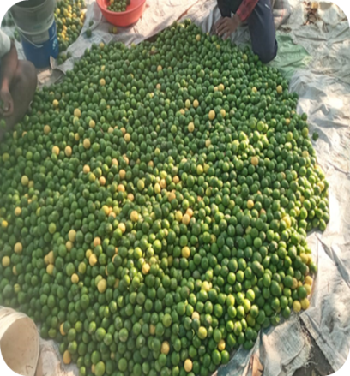
Vijayapura district alone contributes nearly 58 per cent of Karnataka’s total lime production, with acid lime cultivated on 10,777 hectares and producing 2,53,134 metric tons during 2021–22. Despite this prominence, average productivity remains at only about 800 fruits per plant per year, far below the achievable potential of 1,000–2,000 fruits. This indicates significant scope for improving productivity, farmers’ income, and regional economic growth.
One of the major constraints affecting acid lime cultivation in Vijayapura is the widespread occurrence of nutrient deficiencies, particularly of essential macro- and micronutrients such as nitrogen, phosphorus, boron, iron, manganese, and zinc. These deficiencies are largely attributed to the semi-arid climate and inherent soil constraints of the region. Nutrient imbalances adversely affect plant physiology, leading to poor flowering, inadequate fruit set, reduced summer yields, and increased susceptibility to sucking pests and mites. As a result, fruit size and juice content decline, lowering market value and causing substantial economic losses to farmers. Traditional cultivation practices, which often overlook integrated nutrient and pest management, further aggravate the problem by contributing to higher fruit drop, inconsistent yields, and declining orchard productivity.
The Solution: Integrated Management with Arka Citrus Special
To address these persistent challenges, ICAR–Krishi Vigyan Kendra (KVK), Indi, implemented 80 Front Line Demonstrations (FLDs) between 2018 and 2025 across adopted villages in Vijayapura district, covering a total area of 32 hectares. Each demonstration was laid out on 0.4 hectares along with matching control plots.
Technology Package Highlights:
- Integrated Bahar management for regulated flowering.
- Foliar application of Arka Citrus Special, a balanced micronutrient formulation containing zinc, boron, manganese, iron, copper, and other essential elements.
- Adequate irrigation in May, followed by light pruning in June.
- Application of 50 ppm GA₃ after pruning to stimulate vegetative growth.
- Spraying Lihocin at 15-day intervals during September for flowering regulation.
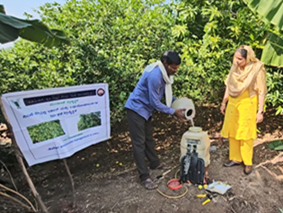
- Monthly foliar sprays of Arka Citrus Special mixed with shampoo sachet and lemon juice, starting one month prior to flowering and continuing until harvest.
- Timely management of sucking pests using recommended insecticides.
Comprehensive Extension and Positive Outcomes
Alongside these demonstrations, ICAR–KVK Indi conducted more than 200 training programmes, organized over 20 field days, and provided more than 1,000 on-field and off-field consultations across major lime-growing villages of the district. This comprehensive extension effort enhanced farmers’ awareness, addressed nutrient deficiencies, improved plant resilience against pests, and resulted in visible improvements in fruit size, yield, and quality, making the approach sustainable and farmer-friendly.
Ensuring Availability: Local Production of Arka Citrus Special
However, despite the growing demand for Arka Citrus Special, limited availability in local markets emerged as a major constraint. To overcome this, ICAR–KVK Vijayapura-II (Indi) acquired the production technology licence for Arka Citrus Special from ICAR–IIHR, Bengaluru. With financial support of ₹4.00 lakh from ICAR–ATARI, Bengaluru, and ₹6.00 lakh from the Karnataka State Lime Development Board for licence procurement, machinery, and training, a dedicated production unit was established on the KVK Indi campus in September 2022. Production began in January 2023.